
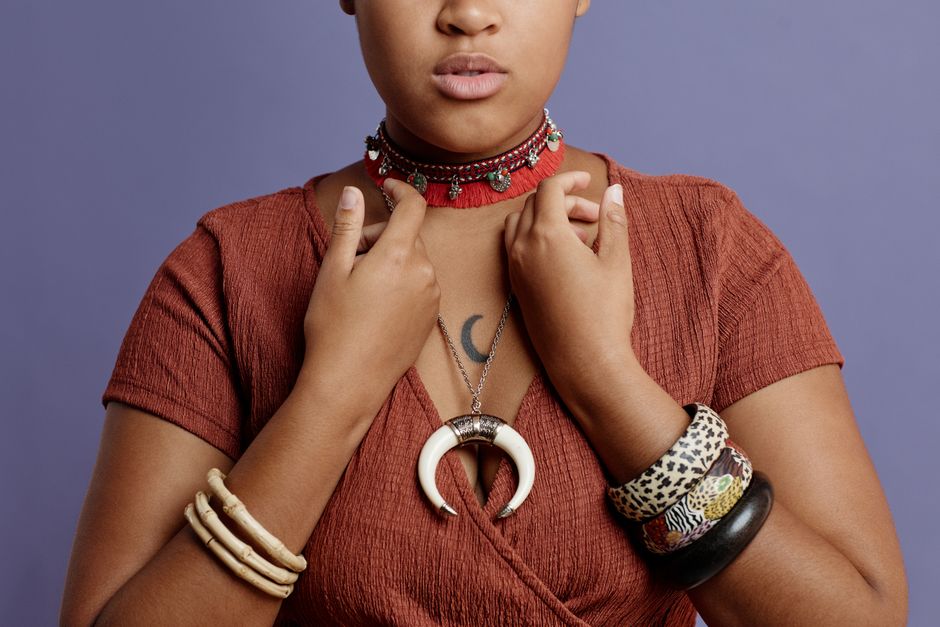
Start with three necklaces, not five: a close chain, a medium chain, and one pendant with enough space to sit on its own. That structure gives most outfits shape without making the neckline look crowded. The strongest everyday stack usually comes from different lengths, different textures, and one clear focal point.
No state law is discussed on this page; the subject is jewellery styling, materials, and care. This is not legal advice — consult a licensed attorney.
Choose Necklace Lengths Before You Choose Charms
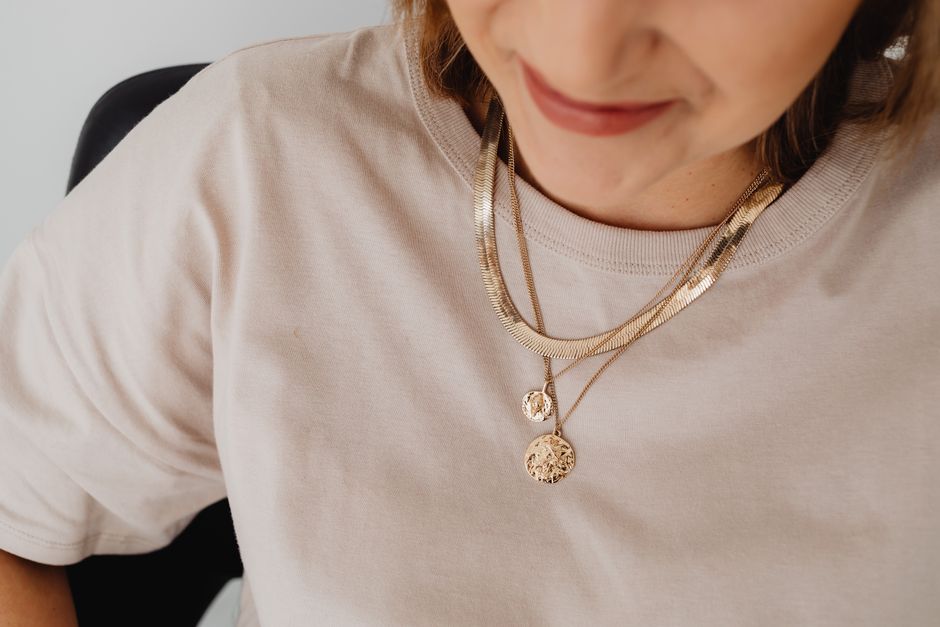
Measure first. A necklace that looks elegant on a product page may land in a different place on your body, especially if the chain has an extender or the pendant adds weight. The clearest starting map is 16 inches, 18 inches, and 20 to 22 inches. This spacing creates visible separation on many necklines and gives each piece a defined job.
Use this length map for a standard stack
| Layer | Useful length | Best role | Common neckline |
|---|---|---|---|
| First | 14 to 16 inches | Fine chain or small charm | Boat neck, crew neck, open shirt |
| Second | 17 to 18 inches | Medium chain or small pendant | V-neck, square neck, scoop neck |
| Third | 20 to 22 inches | Focal pendant or textured chain | Deep V-neck, cardigan, plain knit |
Adjust the map for your body and clothing
- Measure from the clasp around your neck, then add the pendant drop to estimate where the piece will sit.
- Put on the top you plan to wear. A high crew neck often hides a 16-inch chain, while a low V-neck may need a 20-inch pendant.
- Leave at least 1.5 inches between pendant bottoms. If the pieces touch when you move, the stack needs more separation.
- Check the chain while standing and sitting. A pendant can move several inches when your posture changes.
Verdict: Buy for the final position on your neckline, not for the number printed on the product page. The 16-18-20-inch pattern is the safest starting point, but the garment decides the final adjustment.
Match Chain Weight to Your Neckline and Hair
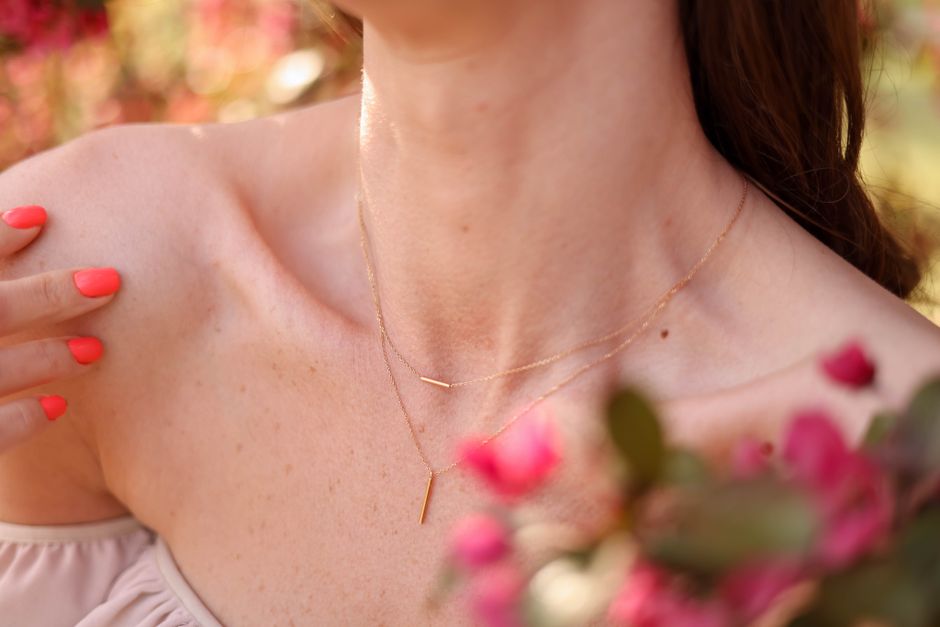
Chain weight changes the balance of an outfit more than many people expect. A fine chain can disappear beside thick knitwear, while a wide curb chain can overpower a silk camisole. The correct match is not only about taste. It is about visual scale, movement, and the amount of space around the neck.
Use fine chains for clean, close layers
Fine cable, box, and bead chains work best when the neckline already has detail. A striped shirt, lace-trimmed top, or ribbed turtleneck needs a quieter necklace so the jewellery does not fight the fabric. Keep the first layer between 0.8 and 1.5 millimetres when possible. A tiny pendant can add interest without creating another heavy line across the clothing.
Hair also matters. Long hair worn down can cover a fine chain, especially one made from bright polished metal. If the necklace keeps disappearing, move the chain to 18 inches, choose a slightly thicker profile, or wear the hair behind one shoulder. Do not keep adding necklaces to solve a visibility problem. More jewellery can make the neckline look dense while the original chain remains hidden.
Use medium and heavy chains as controlled contrast
A medium curb or rope chain gives structure to a plain T-shirt, open blazer, or simple knit. A chain around 2 to 4 millimetres can act as the middle or longest layer, but it should usually be paired with two quieter pieces. Three thick chains create a hard horizontal band that can shorten the appearance of the neck.
For a deep V-neck, place the strongest chain on the same vertical path as the neckline. A pendant that lands too high interrupts the V, while one that falls too low can look detached from the outfit. For a boat neck, keep the focal piece above the fabric edge or move it well below the collarbone. The empty space is part of the design.
Verdict: Let clothing density decide chain weight. Fine layers suit detailed necklines; one medium chain wins against a plain top; heavy chains need open space and should not form a crowded band.
Which Gold Chains Earn a Place in a Daily Stack?
For product selection, material matters more than a familiar logo. Solid gold handles daily contact better than plating, while gold vermeil offers a lower-cost route but needs more careful exposure to water, sweat, and perfume. The product names below are useful reference points, not affiliate recommendations. Materials, lengths, and stock can change, so check the current brand listing before purchase.
Compare four recognisable options by role
| Brand and product | Material reference | Useful length or size | Best role |
|---|---|---|---|
| Mejuri 14k Gold Box Chain | 14k solid gold | 16 to 18 inches | Durable base layer |
| Catbird Sweet Nothing Chain | 14k solid gold | About 16 inches | Very fine first layer |
| Missoma Ridge Chain | Gold vermeil or plated finish, depending on the listing | About 16 to 18 inches | Textured middle layer |
| Monica Vinader Rolo Chain | Gold vermeil or recycled gold finish, depending on the listing | 16 to 20 inches | Medium-weight pendant support |
Pick the material that matches your wear pattern
If you plan to sleep, shower, exercise, and wear the same chain most days, choose solid 14k gold for the foundation. It costs more at purchase, but the surface does not rely on a thin colour layer that can fade. For occasional wear, gold vermeil can be a sensible middle choice. Store it dry, remove it before swimming, and wipe it with a soft cloth after use.
The clearest winner for a daily base is the Mejuri 14k Gold Box Chain because solid gold gives the stack a durable anchor and the box profile adds texture without needing a large pendant. For the smallest, quietest top layer, Catbird Sweet Nothing Chain is the stronger styling choice. Use plated or vermeil pieces in the middle when you want variety without paying solid-gold prices for every layer.
Verdict: Spend the most on the base chain, not the loudest piece. A durable 14k gold foundation makes the rest of the stack easier to change.
Fix the Four Layering Failures That Make Jewellery Look Messy

Most bad stacks fail for a practical reason: the chains occupy the same space. The solution is usually subtraction, not another purchase.
Correct these common mistakes
- Same-length chains: Replace one 18-inch chain with a 16-inch or 20-inch option. Two identical lengths will cross and hide each other.
- Matching textures everywhere: Pair one smooth chain with one curb, rope, bead, or paperclip texture. Repeating the same link makes the stack look flat.
- Too many pendants: Keep one main pendant and remove symbols that compete with it. The smaller pieces can move to another outfit.
- Mixed gold tones without a bridge: Add one two-tone piece or repeat the warmer metal in an earring or ring. A single yellow-gold chain beside several pale pieces can look accidental.
- Clasp and extender tangles: Fasten every clasp, keep the pendants separated, and use a short necklace spacer if the pieces repeatedly twist together.
Know when the stack needs less jewellery
Remove the shortest layer when your collar has ruffles, a high scarf, a bold print, or a large necklace-like detail. Remove the pendant when your earrings already create the focal point. If a chain leaves a red mark, catches hair, or pulls against clothing, stop wearing it until the fit or finish is resolved. Comfort is evidence that the design is not working for daily use.
A necklace spacer can help with repeated tangling, but it is not a cure for poor length selection. If the chains still meet at one point after spacing, change the length pattern. A stack that needs constant adjustment is too complicated for the outfit.
Verdict: When a stack looks messy, remove one piece first. The best correction is usually more space, less weight, or one fewer pendant.
When Gold Necklace Layering Is Not the Right Buy
Layering is not automatically the best jewellery choice. Some wardrobes need one strong chain, a short pendant, or a non-metal alternative. The right verdict depends on the problem the necklace is meant to solve.
Should you buy several chains or one statement piece?
Buy one statement necklace when your clothing is already detailed, your work setting rewards restraint, or you dislike adjusting jewellery during the day. A single 3 to 5 millimetre curb chain can give a plain shirt enough structure without the movement and maintenance of three layers. It is also the better purchase when your budget only covers one durable piece. Put that money into solid 14k gold rather than buying several thin plated chains that may need replacement.
When are gold-filled, silver, or no-chain options better?
Choose gold-filled jewellery when you want a lower price than solid gold but still need a thicker bonded gold layer than standard plating. Choose sterling silver when your wardrobe and other jewellery use a cooler metal tone. Choose no necklace when the neckline already has a strong collar, scarf, embroidery, or bold earrings. These are not lesser choices; they solve different styling problems.
For a first purchase, my specific recommendation is one 16-inch solid 14k gold chain, one 18-inch textured chain, and one 20-inch pendant only after the first two pieces work together. That sequence protects your budget, leaves room for honest testing, and creates a wearable stack instead of a crowded collection.