
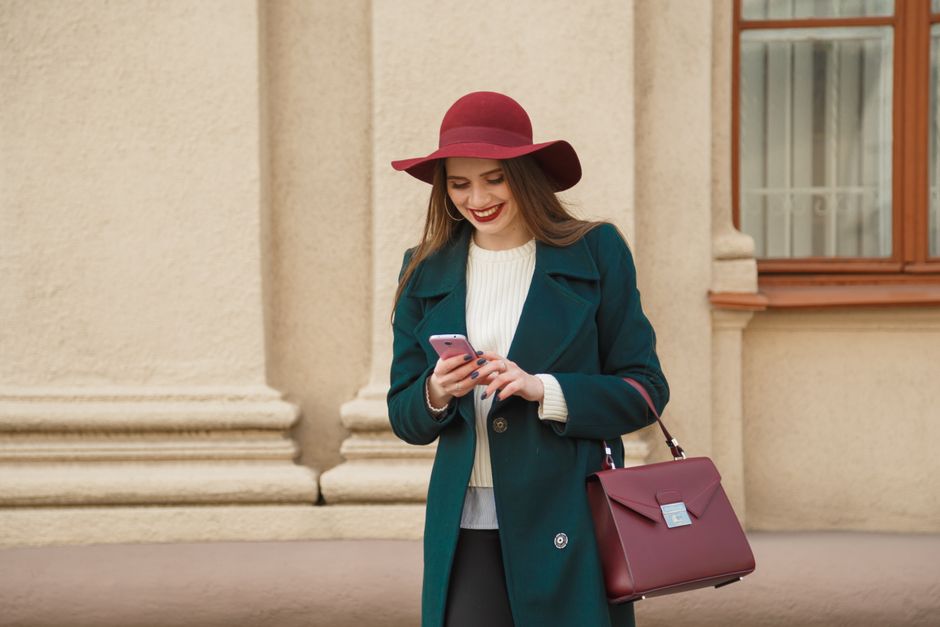
Burgundy can give a familiar neutral outfit a clear point of interest without asking you to rebuild it. A wine-coloured bag beside a grey jumper, or dark red shoes beneath cream trousers, changes the mood through a small area of colour. The useful question is where that colour should sit and how much attention you want it to receive. Start with one accessory, then let the surrounding clothes make space for it.
How to Style Burgundy Accessories with Everyday Neutrals
Neutral outfits vary more than their simple colour descriptions suggest. Chalky cream, warm camel, blue-grey, and deep charcoal each provide a different background. Burgundy varies too: some pieces lean towards plum, others towards brown or red. Put the actual items together in daylight rather than expecting every wine-coloured accessory to behave the same way.
You do not need an exact colour match between accessories. A single burgundy piece can look complete when its size, finish, and position feel right. Repeating the shade is an option, not a requirement.
Choose the role your accessory will play
A bag places colour near the middle of the outfit, so it often becomes an obvious focal point. A compact structured bag gives a different impression from a soft oversized tote, even in a similar shade. Choose the shape that suits your day before deciding how much colour the outfit needs.
Shoes create a lower focal point. They are particularly useful when the rest of your clothes are simple and you want interest to appear as you move. Check the trouser or skirt hem with the shoes on: a beautiful colour has little effect if it disappears completely beneath excess fabric.
A belt offers a smaller interruption across the waist. It works well when the buckle and width suit the garment loops, and when you actually want to emphasise that horizontal line. A scarf puts burgundy near the face, where its pattern and softness become as noticeable as the colour.
Use cream and beige for clear contrast
A burgundy bag against cream clothing is an easy way to make its shape visible. Try an ivory shirt, oatmeal trousers, and a dark wine shoulder bag. Keep shoes in a quiet brown or taupe if you want the bag to remain the main detail.
With beige, look at the depth of both colours. A pale sandy outfit can support a dark, glossy accessory, while a warmer biscuit shade may feel more relaxed beside burgundy suede or a softly textured scarf. These combinations do not need to match precisely; they need enough difference to look intentional.
If the outfit feels too pale overall, add a darker neutral through your shoes or outer layer. That gives the burgundy another substantial colour to sit beside, especially when the accessory itself is small.
Bring depth to grey and charcoal
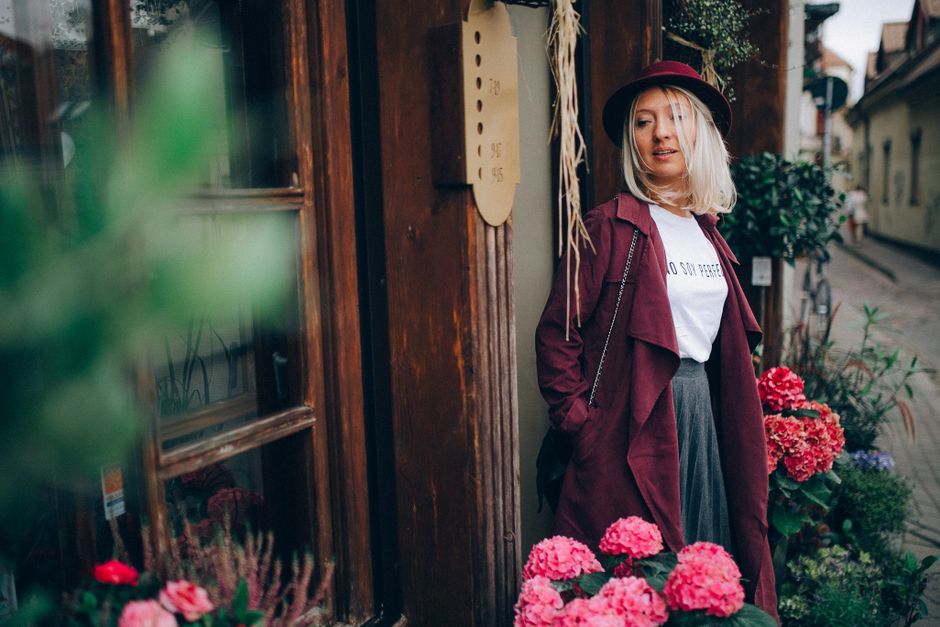
Grey gives you room to adjust the mood through texture. A burgundy leather belt with grey wool trousers looks more defined than the same shade loosely wrapped as a scarf over a grey jersey top. Decide whether you want a crisp detail or a softer wash of colour.
For an everyday combination, wear a mid-grey jumper with charcoal trousers and wine-coloured flats. The different greys keep the outfit from looking like a uniform block, while the shoes supply a deliberate finish. A plain bag can sit quietly alongside them.
If you prefer a single grey tone, use fabric differences to create interest: a smooth shirt with textured trousers, for example. Burgundy then has a clear role without carrying the entire outfit. Small silver earrings can add a little light if the colours feel especially deep.
Make navy, black, and brown feel distinct
Navy with a red-leaning accent
Try a burgundy bag beside a navy cardigan and a white shirt. The white opening at the neckline separates the dark colours and keeps the outfit readable. You can use navy trousers for a continuous base or add grey bottoms if you prefer more variation.
Black with a visible finish
Very dark burgundy can blend into black, particularly indoors. A polished surface, contrasting stitching, or a clearly shaped bag can help the accessory register. If subtlety is the aim, that close relationship may be exactly what you want.
Brown with balanced warmth
Chocolate trousers and a cream top provide a useful background for a wine belt or bag. Avoid assuming the brown shoes must match the burgundy accessory. Instead, repeat the brown somewhere substantial and allow the accessory to remain a separate colour note.
Repeat the colour with restraint
If you enjoy matching details, repeat burgundy in different proportions. A bag and a narrow stripe in a scarf can feel more relaxed than a bag, shoes, belt, and scarf all competing for attention. Keep one piece dominant and let the other act as a quiet echo.
Stand back from the mirror to judge the whole arrangement. Two accessories may look harmonious close up but form separate, distracting blocks from a distance. Removing one is a useful styling adjustment, especially when the outfit already includes strong seams or a noticeable print.
Hardware also affects the balance. Several large buckles and chains can become the main story even when the colours are restrained. Choose the jewellery after the bag and belt so you can see how much metal detail is already present.
Let texture decide the level of polish
Glossy burgundy leather can give simple clothes a sharper finish. Picture a plain ecru knit, dark tailored trousers, and a smooth wine-coloured bag. The contrast between soft fabric and a reflective accessory creates interest without adding another colour.
Matte finishes feel different. A suede-effect bag beside brushed cotton or a wool scarf beside a smooth coat can create a quieter combination. Check care instructions before choosing these pieces for wet weather, and think about how the accessory will be carried throughout the day.
Patterned accessories need a little more room. If a burgundy scarf includes cream and charcoal, borrow one of those shades for your clothing. You then have a clear connection without needing a second burgundy item elsewhere.
Build a combination you can repeat
Start with an outfit you already wear comfortably and photograph it with one burgundy accessory. Look at where your eye goes first. If the colour lands where you want attention, keep the rest straightforward. If it feels disconnected, try changing the accessory’s position or size before buying something to match it.
A practical repeat outfit might be grey trousers, an ivory top, a navy layer, and a burgundy bag. Another could be beige separates with wine shoes and a brown tote. Once the proportions work, you can rotate the clothes while keeping the same small colour decision.
The accessory earns its place when it works with your everyday movement as well as your palette. A bag that holds what you need or shoes you can comfortably wear will give that rich shade far more opportunities to become part of your wardrobe.