
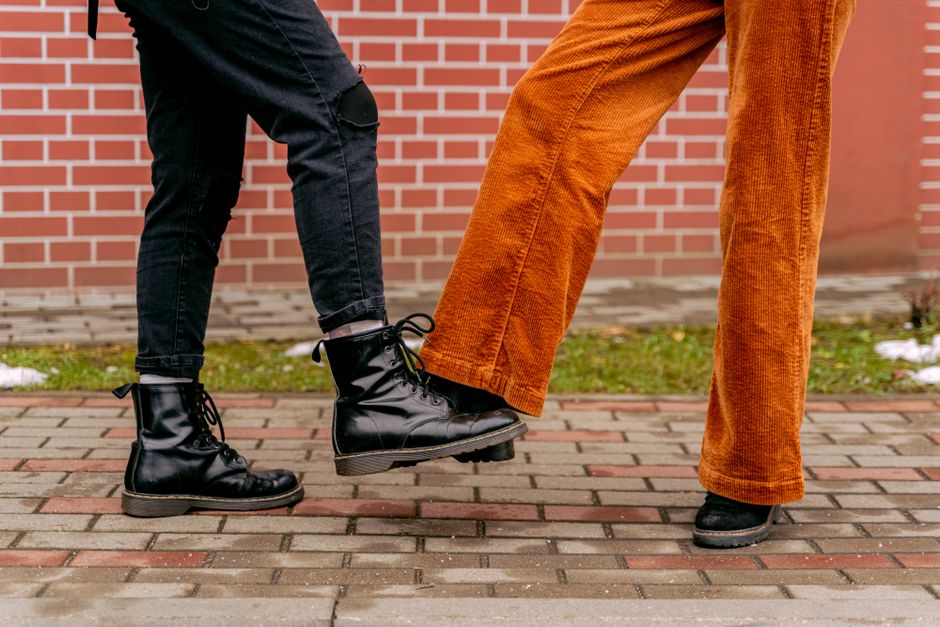
Wide-leg trousers and winter boots can make a useful everyday pairing, provided the two pieces have enough room to move together. The challenge usually sits at the hem: fabric catches on a boot shaft, pools around the sole or hides the shape of the shoe. Start there, rather than building the entire outfit and hoping the footwear works. A few adjustments to length, volume and texture can make trousers you already own feel much easier to wear through colder days.
How to Wear Wide-Leg Trousers with Winter Boots
Think of the trouser leg and boot as overlapping shapes. A generous leg needs space to fall around the upper part of the boot; a cropped leg makes that upper part visible. Neither arrangement requires a particular body shape or heel height. What matters is whether the fabric hangs as you intend when you stand, sit and walk.
Try your trousers with the socks and boots you actually plan to wear. Fasten the trousers at their usual position and walk across the room before judging the length. A waistband sitting lower than normal can make a suitable hem appear too long, while an unusually thick sock can change how comfortably the boot fits.
Choose the hem before the heel
A full-length wide leg often looks clean when the front lightly meets the boot and the back stays clear of the floor. You do not need a dramatic puddle of fabric to create a relaxed line. In winter, a trailing hem is especially inconvenient around wet pavements, grit and public transport steps.
Cropped trousers call for a different approach. Let the boot shaft rise beneath the hem if you want continuous coverage. Check that there is enough overlap when seated, since trousers lift at the knee. If you enjoy a visible sock, make it a deliberate part of the outfit with a colour that relates to the trousers or knitwear.
For trousers that work with several boots, choose the pair you wear most often as your hemming reference. A deep platform and a slim flat sole may need different lengths. Temporary alterations can help you assess a new hem before committing, but keep pins away from your feet and remove them before wearing the outfit out.
Give the boot shaft breathing room
A close-fitting ankle boot is a useful starting point under fluid trousers. Its upper creates less interruption beneath the fabric, especially when the trouser leg narrows slightly around the knee. Smooth uppers also tend to show fewer outlines than buckles or large pull tabs under a lighter cloth.
Chunkier boots can work just as well with a broader, more structured leg. Look at the trouser opening from the side: it should pass over the boot without catching at the top. If the hem keeps resting on the shaft, try a roomier leg or make the boot fully visible with a shorter trouser length.
Leave wide legs outside the boots for this particular silhouette. Trying to pack all that fabric into a narrow shaft creates folds and changes the shape completely. If you like a tucked look, save it for trousers designed to sit comfortably inside your footwear.
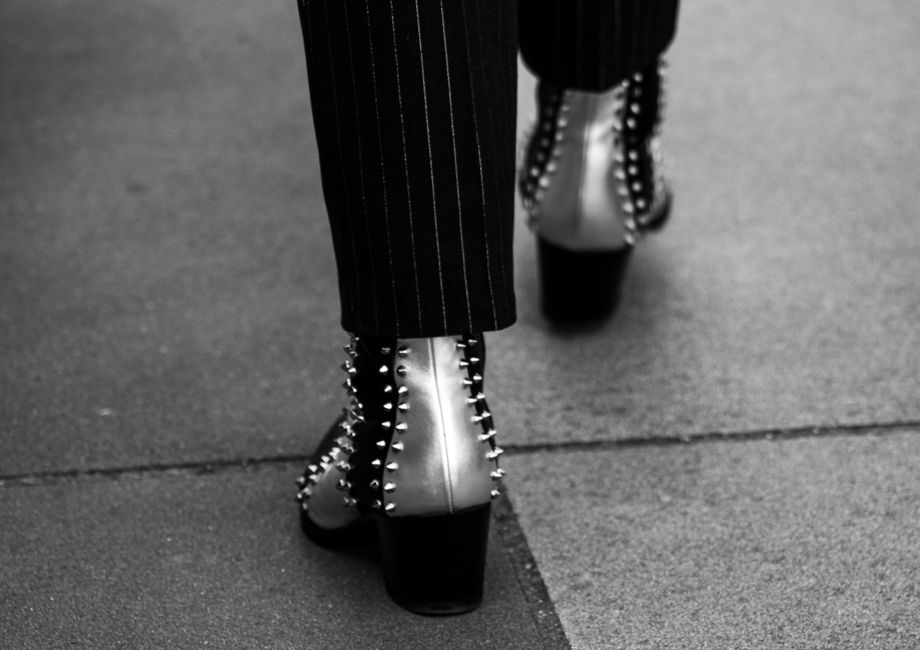
Use the toe shape to set the mood
A rounded toe and a substantial sole give tailoring an easy, practical character. They suit wool trousers, ribbed jumpers and casual jackets, especially when some of the boot remains visible. Keep the hem clear of the sole edge so the fabric does not fold underneath as you walk.
An almond or softly squared toe creates a more tailored finish beneath a broad leg. This can be helpful when you want a polished outfit without adding a high heel. Pointed toes offer another option, but check the fit and walking comfort instead of choosing them solely to create a longer visual line.
Heels are optional. If you prefer one, try a stable shape that feels comfortable on your usual route. Styling cannot tell you whether a sole is appropriate for slippery conditions, so let the actual weather and footwear design guide that part of the decision.
Match fabric weight with the boot
Soft, draping trousers can look elegant over a streamlined boot, but thin fabric may reveal every seam and fastening underneath. Test the combination in daylight. If the shaft outline distracts you, change to a smoother boot or a denser trouser cloth rather than trying to pull the fabric into place repeatedly.
Heavier wool blends and sturdy twills usually create a clearer boundary around substantial footwear. A pressed crease can bring definition to an otherwise relaxed leg. Equally, an uncreased pair can look intentional with a textured knit and simple boots; sharp tailoring is one option, not a requirement.
Consider what happens beneath the trousers, too. Thermal layers should sit smoothly and allow the waistband to close comfortably. If an extra layer makes the legs cling or restricts sitting, try a different base layer or a more generous trouser cut.
Build three outfits from the hem upward
For a day at the office
Start with charcoal wide-leg trousers and smooth black ankle boots. Add a fine knit that sits neatly at the waistband, then a jacket with enough room through the shoulders. The dark footwear keeps the lower half visually quiet, leaving the crease and fabric movement to provide interest. Choose a bag that accommodates your essentials without competing with the trouser volume.
For casual errands
Pair sturdy navy trousers with rounded brown boots and an oatmeal jumper. A short jacket can make the waist easy to see, although a longer coat also works if that is what keeps you comfortable. Let the jumper finish near the waistband or tuck a small section at the front if the fabric is not too bulky.
For an evening indoors
Try softly draping dark trousers with a sleek flat or low-heeled boot and a simple satin-finish blouse. Keep the trouser hem tidy enough for the journey. A small pair of earrings can add polish without requiring a change of footwear, and a fine cardigan offers an extra layer once you arrive.
Check the outfit in motion
Before leaving, sit down, climb a step and take a few normal strides. Look for a hem that catches behind the heel, fabric that gathers on the shaft or a waistband that needs constant adjustment. These small inconveniences matter more over a full day than whether the outfit looks perfect in a still photograph.
If the combination feels heavy, change one element first. A shorter top can reveal more of the trouser shape; a smoother boot can reduce bulk underneath it. Once the hem moves freely and your footwear feels secure, you have a practical foundation that can carry different jumpers, shirts and coats throughout your winter wardrobe.