
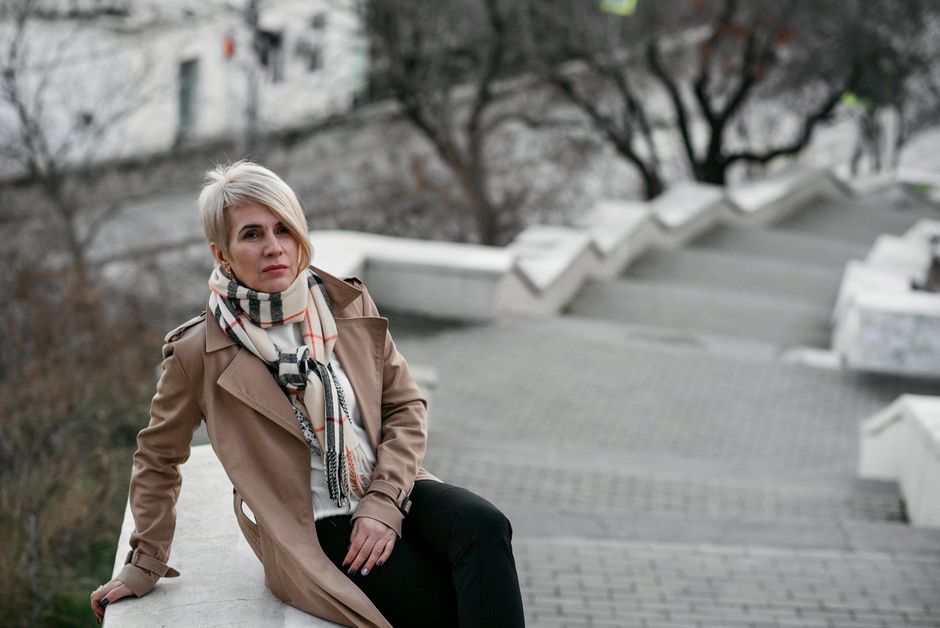
A wool scarf can soften the practical shape of a puffer jacket, introduce colour near your face and make a familiar winter coat feel different. The tricky part is finding space for it. Between a padded collar, a hood and the scarf itself, the neckline can quickly become crowded. Start by fastening your jacket as you would outdoors, then decide where the scarf can sit comfortably. The most useful arrangement is one that stays put without constant tightening or tucking.
Ways to Style a Wool Scarf with a Puffer Jacket
Look at the jacket before choosing a knot. A short puffer with an open neckline can accommodate a loose loop, while a high zipped collar may work better with a flat layer tucked beneath it. A large hood takes up space behind your neck, so consider how the scarf sits when the hood is down as well as raised.
The scarf’s shape matters too. A long, narrow rectangle behaves differently from a blanket scarf or a short woven style. Try what you already own before buying a larger one. More fabric can create a generous look, but it also needs somewhere comfortable to go.
Use a flat tuck with a high collar
When your puffer closes high at the neck, try arranging the scarf beneath the front of the jacket. Lay its centre around the back of your neck, bring the ends forward and cross them loosely over your chest. Smooth the layers before fastening the jacket so the scarf does not form a bulky knot beneath the zip.
A narrower scarf is often easier for this arrangement. If yours is wide, fold it lengthways into a comfortable band, checking that the fold feels soft against your neck. Leave enough room to move your head and fasten the jacket without forcing the zip over thick fabric.
This approach keeps the front relatively simple and lets a little scarf colour show above the collar. Try a muted check beneath a plain navy puffer or soft grey beneath black. If you remove the jacket indoors, the scarf can still sit neatly over the top underneath.
Try one relaxed loop with an open neckline
For a puffer worn slightly open, drape the scarf around your neck with one end longer, then pass that end around once. Let both ends fall forward and loosen the loop until it feels comfortable. Keep the shape relaxed rather than building a tight roll beneath your chin.
Adjust the ends according to the jacket length. On a short puffer, uneven ends can break up the horizontal line of the hem. With a long coat, shorter visible ends may keep the front tidier. There is no required measurement; check where the scarf falls when you walk and sit.
If the loop slips, consider whether the scarf is too bulky for the available space. Tightening it repeatedly may make the neckline uncomfortable. A lighter fold or a flatter arrangement is often a better answer, especially when the jacket has a padded stand collar.

Make a folded loop look less bulky
The familiar folded-loop method can be useful on a scarf that is long enough and not overly thick. Fold the scarf in half, place it around your neck and pass the loose ends through the folded end. Pull only enough to keep the arrangement in place, leaving room between the scarf and your neck.
Instead of positioning the loop directly under your chin, shift it slightly to one side and spread the fabric gently. This can create a softer line across a plain puffer. Keep the ends away from the zip and check that you can still turn your head comfortably.
If the folded section becomes a large lump, choose another arrangement. A chunky blanket scarf may simply have too many layers for this method. Styling should work with the fabric’s natural weight rather than trying to compress every scarf into the same knot.
Drape a broad scarf with a simple jacket front
A broad wool scarf can act as a visible outer layer when the weather and your plans suit a looser arrangement. Place it around the back of your neck and let the ends fall down the front. Spread the fabric slightly so its pattern or texture shows without covering every detail of the jacket.
This works particularly well when the puffer front is uncomplicated. A scarf with large checks can become the main decorative element, while the jacket supplies a quiet backdrop. If the coat already has glossy fabric, bold quilting or contrasting panels, try a plain scarf to give the eye a place to rest.
Loose ends need attention around doors, bags and busy journeys. Keep them contained when necessary and change to a more secure arrangement for active movement. A drape that looks lovely while standing still should also suit what you are actually doing outside.

Choose colour with the whole outfit in view
For a gentle combination, work within one colour family: a charcoal scarf with a grey puffer, or cream with a soft beige jacket. Different textures can provide interest even when the colours are close. The wool surface gives a useful contrast to a smoother outer shell.
If you want a brighter accent, let the scarf carry it. A red scarf over a dark puffer or a clear blue scarf over a neutral one can bring colour near the face without requiring matching gloves and a hat. Repeating the colour in one small detail is optional, not a condition of a finished outfit.
With a patterned scarf, look for a background colour that relates to the jacket. A navy-based check over navy feels connected even when the check includes several other shades. Try the scarf with the hat you actually wear, since the two will sit close together and may change the balance.
Work around hoods, bags and hair
A hood can push a scarf forward when it rests against the back of your neck. Smooth the scarf before arranging the hood and test the combination with the hood raised. If everything feels crowded, use a thinner scarf or place more of its length down the front rather than wrapping it repeatedly.
Put your bag on before making the last adjustment. A shoulder strap may trap one end and pull the scarf off centre. Keep the scarf clear of moving fastenings and make sure you can open the jacket without dismantling the whole arrangement. Hair can be tucked clear of the collar or left outside, depending on what feels comfortable.
- Zip the jacket slowly so wool fibres stay clear of the fastening.
- Check the neckline while looking down and turning your head.
- Contain long ends when your journey requires it.
- Follow the scarf’s care label and let damp pieces dry before storing them.
Once you find an arrangement that suits your puffer, use it as a starting point rather than a fixed formula. A flat tuck may suit the morning commute, while a relaxed loop works for a shorter walk. Change the fold, colour or visible length when you want variety, keeping comfort and easy movement at the centre of the outfit.