

At 4:30 p.m., the sky is already blue-gray, your office lighting has washed out your face, and the makeup that looked fresh at breakfast now looks flat. Warm winter makeup fixes that problem with controlled color: amber, cinnamon, terracotta, rosewood, and soft bronze placed where natural daylight has disappeared.
This routine takes about 10 minutes. You need a moisturized base, one matte warm shade, one soft shimmer, a muted blush, and a brown or berry lip. The goal is not heavy coverage. It is enough warmth to keep your features visible under weak winter light.
Choose warm tones that still look natural in winter light
Warm makeup does not mean every product should be orange. The best winter shades sit close to your natural undertone, then add a little red, gold, or brown for depth. In short daylight, very yellow colors can look dull, while strong orange can make the skin look irritated. Start with one warm color family and repeat it across the eyes, cheeks, and lips.
Match the shade family to your undertone
| Skin undertone | Best winter color family | Skip or soften | Useful placement |
|---|---|---|---|
| Cool | Rosewood, cranberry, plum-brown | Bright orange | Outer eye, cheek center, blurred lip |
| Neutral | Cinnamon, toasted rose, soft bronze | Very yellow gold | Crease, cheekbone, lip border |
| Warm | Terracotta, copper, caramel | Blue-based pink | Lid, temples, upper cheek |
| Olive | Bronze, rust, muted peach | Chalky beige | Lower lash line, cheek, lip stain |
| Deep | Burnt sienna, mahogany, garnet | Gray-brown without red | Full lid, blush draping, glossy lip |
Use the three-zone color test
Before applying a strong shade, place a small amount on the eye, cheek, and lip area of your hand. If the color looks disconnected in all three places, it will probably make the face look patchy. A muted cinnamon usually works better than a bright orange because it gives warmth without taking over. For an easy everyday look, choose one matte brown, one warm blush, and one lip color with the same red or peach base.
Best verdict: choose one repeated color family instead of collecting several unrelated warm shades. That single decision makes winter makeup look polished under gray daylight.
Prep dry winter skin before adding pigment
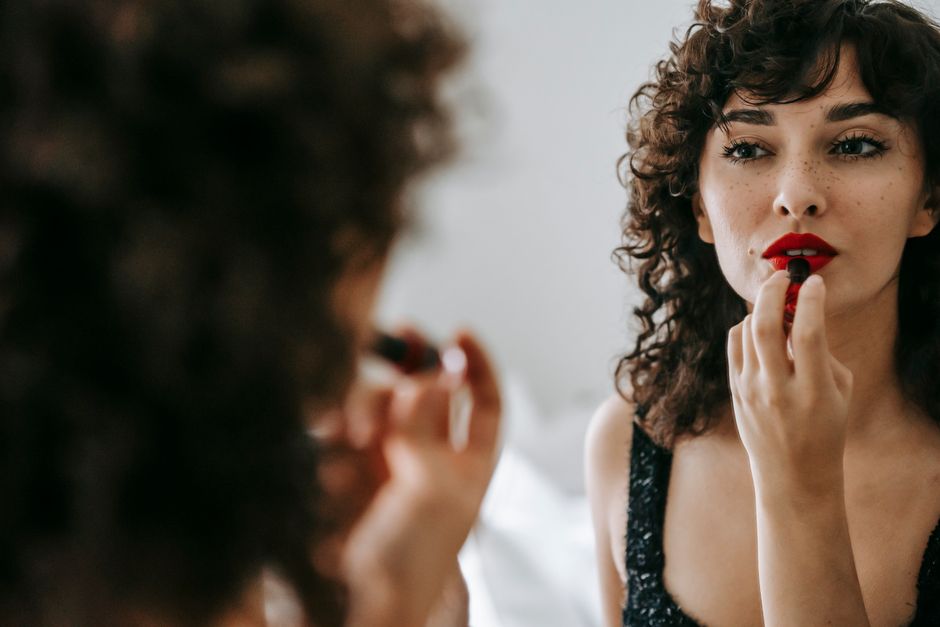
Winter makeup fails most often before color touches the face. Cold air, indoor heating, and hot showers can leave the surface tight and uneven. Powder then catches on dry patches, foundation separates around the nose, and blush looks like a stripe. The fix is a thin, patient base rather than more coverage.
Build a five-minute moisture base
- Cleanse with lukewarm water and pat the skin dry. Do not scrub off flakes right before makeup.
- Press a hydrating serum or light moisturizer into the cheeks, around the mouth, and beside the nose.
- Wait two minutes so the moisturizer stops feeling wet. Makeup slides when the layer underneath stays glossy.
- Apply a pea-sized amount of primer only where makeup breaks apart. Keep the forehead and cheeks lighter if they do not need extra grip.
- Use a small amount of skin tint or foundation in the center of the face, then blend outward. Leave freckles and natural skin visible.
Fix texture without piling on powder
Use a damp sponge around the nostrils and mouth, where winter dryness usually shows first. If a patch is flaky, tap a tiny amount of moisturizer over it with a clean fingertip, then press foundation back into the area. Do not drag a brush across the patch. For concealer, use a half-pea amount under each eye and set only the inner corner if creasing bothers you.
Skip a full layer of powder for a dewy winter look. A small brush loaded with translucent powder can set the sides of the nose, chin, and eyelids while leaving the cheekbones flexible. This technique keeps the warm blush from sitting on top of dry skin like chalk.
Apply a 10-minute warm makeup look
The fastest routine has an order. Work from thin, easy-to-correct layers to stronger color. Keep the main brush clean enough to soften edges as you go.
Step 1: Create soft definition
- Tap a warm matte brown through the crease and along the lower lash line. Keep the color close to the lashes instead of extending it toward the brow.
- Press a copper, champagne, or rose-gold shimmer onto the center of the lid with a fingertip. A pressed shimmer reflects weak light better than a loose glitter.
- Blend a brown pencil between the upper lashes. Brown gives definition without the hard contrast of black.
- Brush a warm blush from the apple of the cheek toward the temple. Keep the highest point below the outer corner of the eye.
- Add bronzer to the hairline, sides of the nose, and jaw only if the face needs more dimension. Two light passes look more natural than one heavy stripe.
Step 2: Finish the face without overloading it
Use a muted rose, brick, or berry lip. Press the color on with a fingertip, then add balm to the center. For a night look, deepen the outer lip corners with a brown-red pencil instead of applying a much darker lipstick over the whole mouth.
Check the result beside a window before leaving home. If the eyes look muddy, clean the edge with a cotton swab. If the cheeks look too bright, press a little leftover foundation over the top. This 30-second check catches most winter makeup mistakes before they meet fluorescent lights.
Pick products that give warmth without a heavy finish

My strongest pick for short winter days is a muted cream or liquid cheek product, not a thick matte powder. Cream formulas keep the skin from looking flat, while one carefully placed powder shadow gives enough structure for the eyes. The products below cover different budgets and finishes, so the routine can stay simple.
Which warm products are worth using?
| Product | Price and size | Best use | Verdict |
|---|---|---|---|
| e.l.f. Bite-Size Eyeshadow in Orange Dreamsicle | $4, four shades | Low-cost warm lid and crease color | Best budget choice for testing orange and copper tones |
| Charlotte Tilbury Luxury Palette in Pillow Talk | $58, four shades | Soft rose, brown, and rose-gold eye look | Best polished option for an easy office-to-dinner eye |
| NARS Laguna Bronzing Cream | $44, 19 g | Natural-looking warmth on cheeks and temples | Best for dry skin that dislikes powder bronzer |
| Rare Beauty Soft Pinch Liquid Blush in Hope or Joy | $25, liquid formula | Muted mauve or warm peach cheek color | Best for long wear, but use one dot at a time |
| Clinique Almost Lipstick in Black Honey | $25, 0.06 oz | Sheer berry-brown lip warmth | Best low-maintenance lip for cold, dry days |
Build the routine around one hero product
For a $4 experiment, use the e.l.f. Orange Dreamsicle palette with a brown pencil and your existing lip balm. For dry skin, choose the NARS Laguna Bronzing Cream and keep powder away from the cheek center. For a fast polished look, use Charlotte Tilbury Pillow Talk on the eyes, Rare Beauty Hope on the cheeks, and Clinique Black Honey on the lips.
Rare Beauty Soft Pinch needs restraint: one small dot can cover both cheeks. Start with less than you think you need, tap it high on the cheek, and add only after the first layer has blended. The clear winner for a five-minute face is Clinique Black Honey because its sheer finish forgives an uneven lip line.
Fix the mistakes that make warm winter makeup look harsh
Why does warm makeup turn orange?
Orange usually comes from using a shade that is too bright, placing bronzer too low, or combining yellow foundation with a strongly orange blush. Replace one product with a red-brown or muted peach shade first. Do not change the entire face at once. On pale skin, a soft rosewood blush often gives more believable warmth than terracotta. On deep skin, a muted brick can look natural while a beige bronzer turns gray.
When should you skip a warm-toned product?
Skip a warm bronzer when the formula is much lighter than your skin or leaves visible orange edges. Use a neutral sculpting shade instead, then add warmth with blush or lip color. Skip a shimmer eye product if the eyelid texture makes it gather in one line; a satin finish gives light without emphasizing every crease. Also skip a full matte base when winter dryness is already visible. A thin skin tint and targeted concealer will look fresher than another layer of powder.
The practical verdict: warm tones work best when only one area is bold. If the eyes carry copper shimmer, keep the cheeks muted. If the lips are deep berry-brown, use a soft blush and a clean lash line. The finished look should still show skin, texture, and expression after the sun goes down.