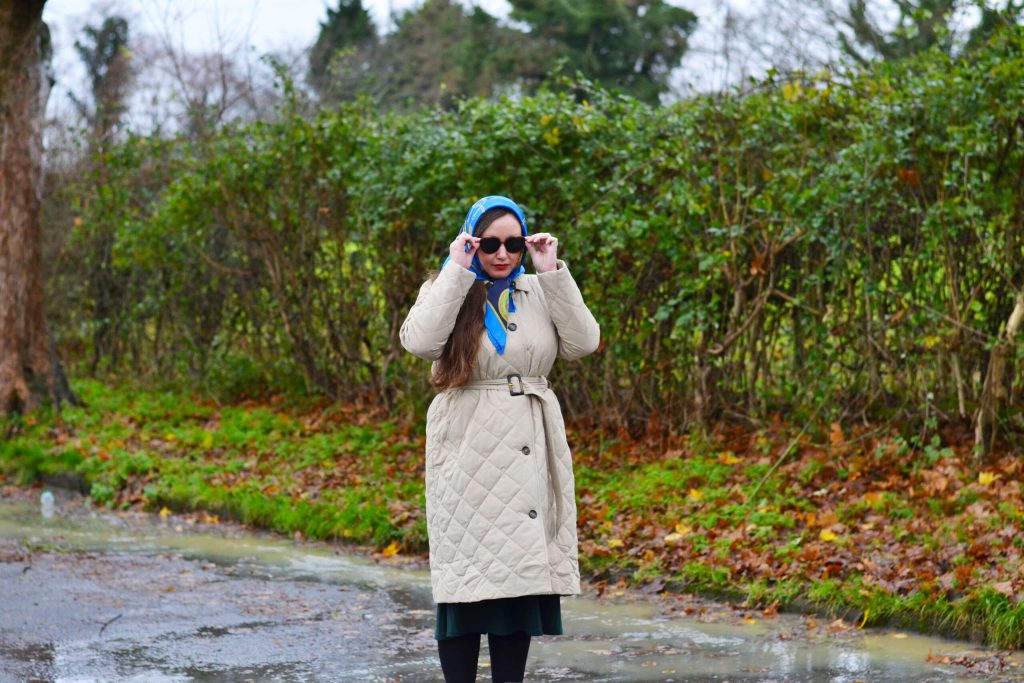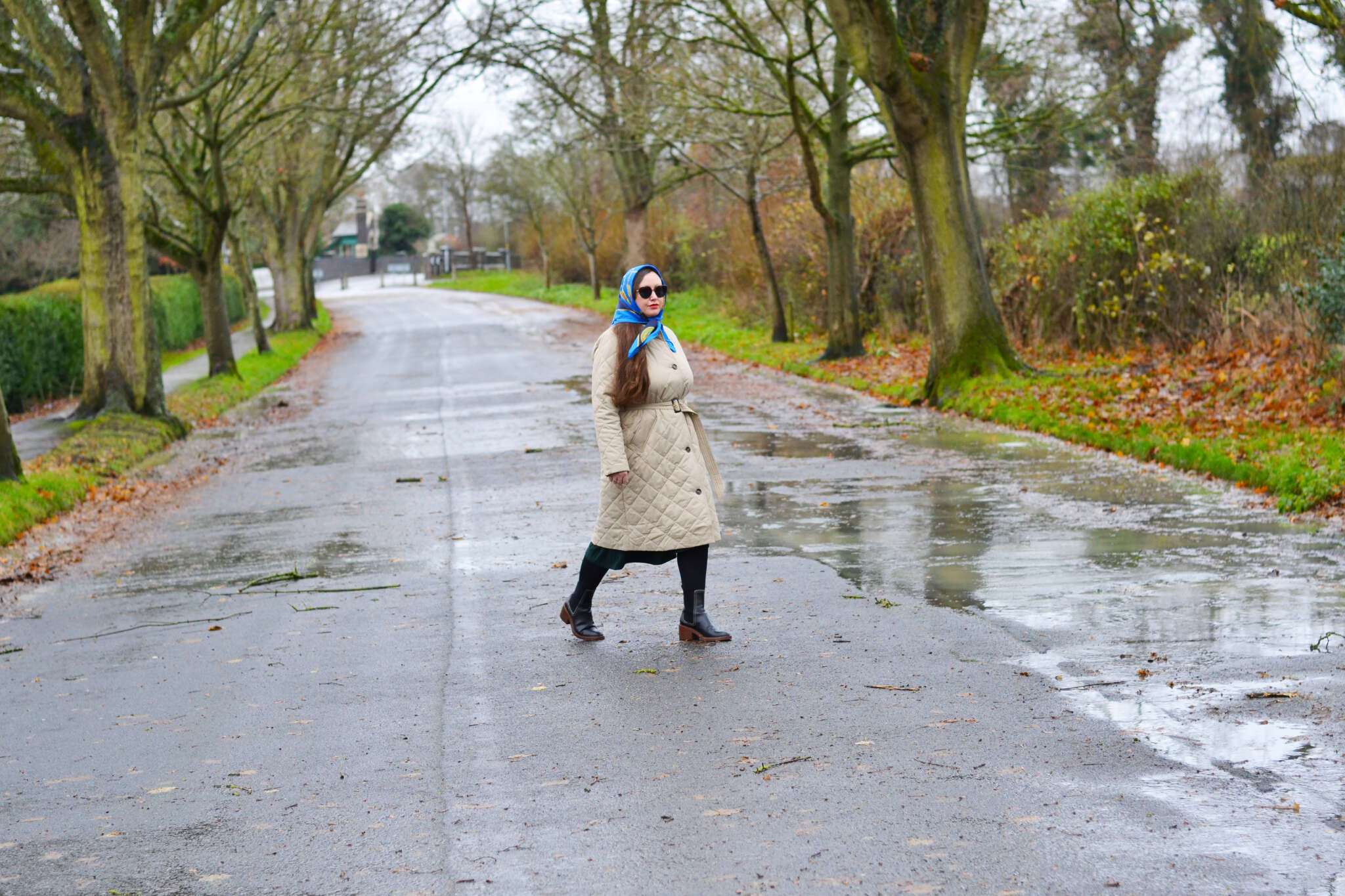
A quilted trench, a simple jersey midi dress and a vintage silk scarf make a country-inspired outfit with a gentle sense of glamour. The appeal comes from the balance between their different surfaces. Quilting gives the outer layer definition, jersey keeps the base relaxed, and silk introduces a lighter finishing detail close to the face. Each piece has a clear role, so the finished outfit feels considered without needing lots of accessories.
This look centres on a Barbour quilted trench and a vintage Celine scarf worn in the hair. Keeping those two pieces in conversation gives the outfit its particular character. The long coat establishes the silhouette, while the scarf changes the mood of familiar everyday layers. It is an approachable way to bring a treasured vintage accessory into regular rotation.
Start with the long quilted silhouette
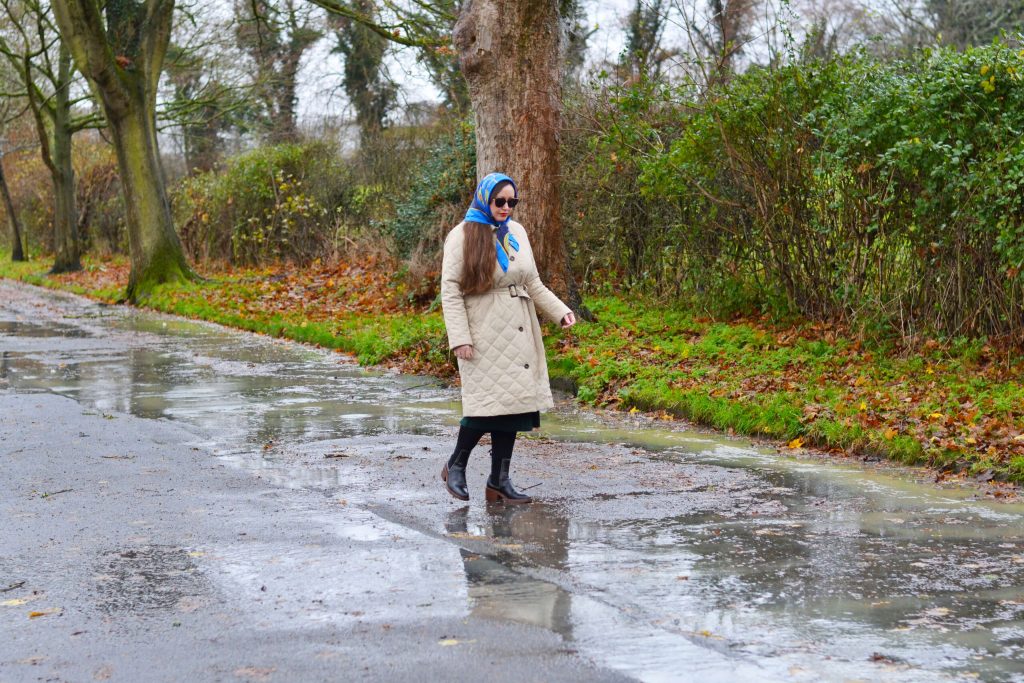
The trench shape creates a continuous outer line over the midi dress. That length is worth considering before adding anything else. Try the coat open and fastened, then look at how much of the dress appears beneath it. A visible section of hem can make the layering feel deliberate, especially when the base is otherwise very simple. The aim is a comfortable relationship between the two lengths.
Quilting already introduces pattern through its stitched surface. A plain dress beneath allows that texture to remain legible. It also avoids having several busy elements compete around the front opening. When choosing an equivalent base from your own wardrobe, look for a piece that hangs smoothly and lets you move freely under the coat.
A longer outer layer can feel substantial even when the individual pieces are easy to wear. Check the shoulder and sleeve areas with the dress underneath. There should be enough room to reach forward and sit down comfortably. If you add another layer later, repeat that check with the complete combination.
Keep the jersey dress uncomplicated
The outfit uses a Zara jersey midi dress from an earlier season. Its usefulness here comes from being a familiar, straightforward base. A simple dress removes the need to coordinate a separate top and skirt, leaving the coat and scarf to provide the interest. This is also a good reason to revisit an existing dress before looking for something new.
Jersey gives the outfit a softer visual centre beneath the quilted surface. Let the dress fall naturally. A relaxed base can still look polished when the outer layer has a clear shape. Before leaving, check that the fabric has settled smoothly at the waist and that the hem is sitting evenly.
Think about the outfit in two settings. Outdoors, the trench and scarf do most of the visual work. Indoors, the dress needs to feel complete on its own. If that balance is right, there is less need for decorative layering underneath. A well-chosen base makes the transition between wearing and carrying the coat much easier.
Make the silk headscarf the finishing point
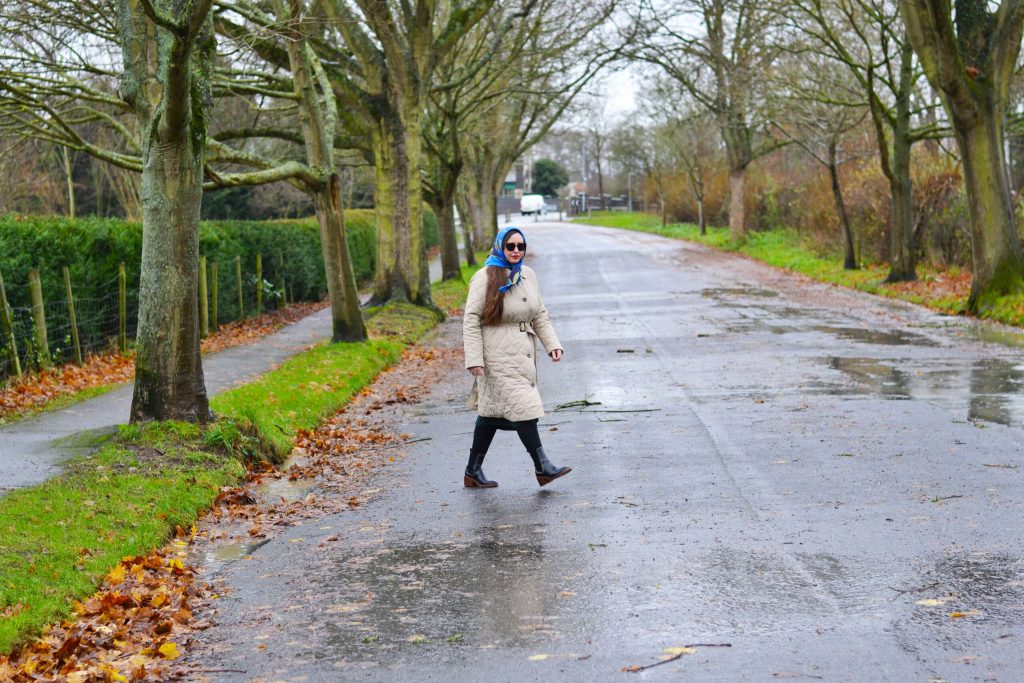
Wearing the vintage Celine scarf in the hair brings its print and sheen into the upper part of the outfit. Against the coat’s quilted surface, silk creates a pleasing change of texture. Position the scarf so that a section of print you enjoy remains visible. Small adjustments around the face can change the whole effect without changing any clothing.
Fold the scarf to a width that feels comfortable, then arrange it with your usual hairstyle. The exact fold depends on the scarf’s shape and size. A broader fold gives more visual presence, while a narrower band reads as a smaller accent. Keep the knot comfortable and check that the fabric feels secure when you turn your head.
For a blustery day, choose outerwear suited to the conditions and arrange the scarf so it stays comfortably in place. The silk brings a decorative element to the practical layers. Check how the scarf sits against the collar as you move, especially if you plan to fasten the coat high at the neck.
Let vintage character sit beside everyday clothes
A vintage scarf can earn its place in an everyday outfit. Here, the jersey dress and quilted coat give it an easy setting. The scarf becomes part of getting dressed, with its colour and pattern bringing individuality to otherwise straightforward layers. Its age and distinctive design add character to the familiar shape of the trench.
If you own several scarves, compare them against the coat before choosing. Look at the overall impression from a little distance as well as the print close up. You may prefer a quiet colour relationship or a more noticeable contrast. Either approach can work when the dress remains simple and the scarf is given a clear position.
Adjust the balance around the neckline
The upper part of this outfit contains the coat collar, the scarf and the frame of the face. Give those elements room to sit comfortably together. If the collar pushes the silk upwards, adjust the fold or the placement of the knot. A small change can make the arrangement feel easier and stop the neckline from becoming crowded.
Keep additional accessories selective. The headscarf already supplies a decorative focal point, so assess any jewellery with the complete outfit on. Consider whether each addition helps the overall balance. Leaving some space around a patterned scarf can make its detail easier to appreciate, especially with the visual texture of quilting nearby.
Build a repeatable outfit from the same pieces
The formula is easy to revisit because its interest comes from shape and texture. Start with the jersey midi, add the quilted trench, and finish with the scarf. On another day, a different fold or a different section of visible print can subtly alter the effect. These small changes allow you to enjoy familiar pieces in fresh combinations.
For the final check, look at the coat length, the dress hem and the scarf placement together. Then move around in the clothes. Comfortable sleeves, an unencumbered neckline and a secure scarf matter as much as the initial mirror view. Those details help this country-inspired combination feel natural enough for an ordinary day, with a vintage touch that remains distinctly your own.